
The Indian stock market has attracted millions of new traders in recent years. With easy access to online trading platforms, real-time market data, and increasing awareness about investing, more people are participating in markets like the NSE and BSE.
Many beginners enter the market with one goal — making quick profits. They study technical indicators, follow stock tips, watch market experts, and search for the perfect trading strategy. However, one important factor is often ignored: risk management.
A trader’s success in the Indian stock market is not determined only by how much profit they make. It is determined by how well they protect their capital during losing trades.
No matter how experienced a trader is, losses are unavoidable. Even professional traders, fund managers, and market experts face losing trades. The difference is that successful traders know how to control their losses and stay in the market for the long term.
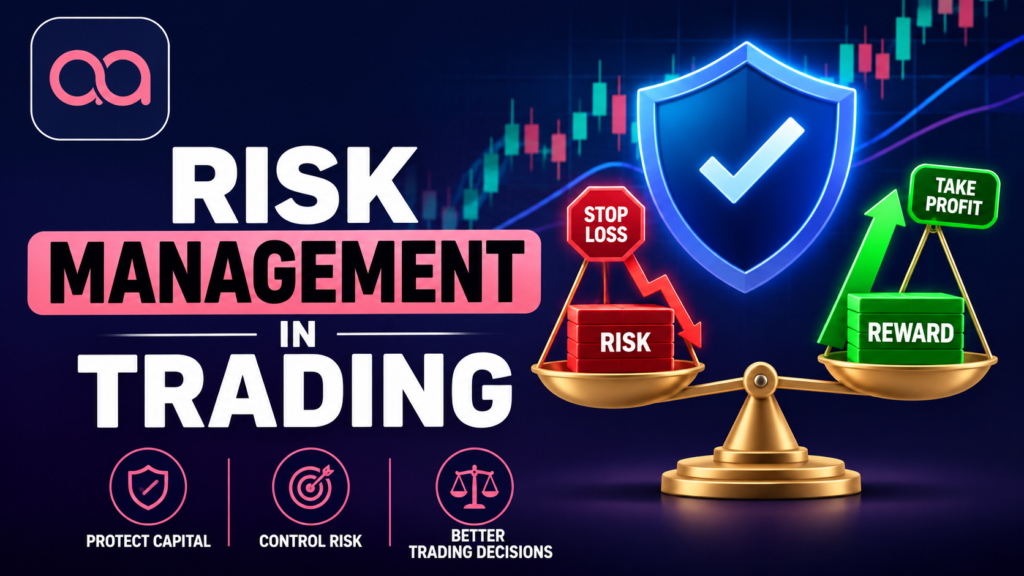
Risk management is the process of identifying, controlling, and minimizing potential losses while trading. It helps traders protect their money, manage emotions, and build consistency.
In simple words:
Good trading is not about avoiding losses. It is about making sure losses do not destroy your trading career.
Why Risk Management Is Important in the Indian Market
The Indian stock market provides many opportunities through equity trading, intraday trading, futures and options (F&O), commodities, and currency markets. However, every opportunity comes with risk.
A trader buying shares of a company can face losses due to:
- Poor company results
- Economic changes
- Government policies
- Global market movements
- Interest rate decisions
- Unexpected news events
Similarly, F&O traders face additional risks because leverage can increase both profits and losses.
For example:
A trader with ₹1 lakh capital may take a futures position worth several lakhs because of margin benefits. While this can increase profits, even a small unfavorable price movement can create significant losses.
Without proper risk control, one wrong trade can remove weeks or months of profits.
Capital Protection Should Be the First Priority
Many new traders focus on earning money but forget the importance of protecting their trading capital.
Imagine two traders:
Trader A:
- Trading capital: ₹5 lakh
- Loses 50% due to poor risk management
- Remaining capital: ₹2.5 lakh
To recover from a 50% loss, the trader now needs a 100% return.
Trader B:
- Uses proper risk management
- Limits losses to small percentages
- Continues trading after losing trades
Trader B has a much higher chance of long-term survival.
The first rule of trading is:
Protect your capital so you can participate in future opportunities.
Position Sizing: How Much Should You Risk on One Trade?
Position sizing is one of the most important parts of risk management.
Many Indian traders make the mistake of putting a large portion of their capital into one stock or one F&O trade because they are confident about the setup.
Confidence does not remove risk.
A professional approach is to decide position size based on:
- Total trading capital
- Maximum acceptable loss
- Stop-loss level
- Market volatility
A commonly followed rule is risking only 1% to 2% of total capital on a single trade.
Example:
Suppose your trading capital is ₹2,00,000.
If you decide to risk 1% per trade:
Maximum loss allowed = ₹2,000
This means even after several losing trades, your account remains protected.
The purpose of position sizing is not to limit profits. It is to prevent one bad trade from damaging your account.
Importance of Stop Loss in Indian Trading
A stop loss is one of the most powerful tools available to traders.
A stop loss automatically exits your trade when the price reaches a predefined level.
Example:
You buy a stock at ₹500.
Your analysis says the trade is invalid if the price falls below ₹480.
You place a stop loss at ₹480.
If the stock falls, your loss is limited.
Many beginners avoid stop losses because they believe:
“The stock will come back.”
Sometimes it does. But sometimes a small loss becomes a major loss.
Indian markets have seen many examples where stocks fall sharply due to:
- Poor quarterly results
- Regulatory action
- Fraud allegations
- Market crashes
- Negative global events
A disciplined trader accepts small losses instead of allowing them to become uncontrollable.
Risk-to-Reward Ratio in Trading
Risk-to-reward ratio helps traders decide whether a trade is worth taking.
For example:
Entry price: ₹1,000
Stop loss: ₹950
Risk: ₹50
Target price: ₹1,150
Reward: ₹150
Risk-to-reward ratio = 1:3
This means the trader is risking ₹50 to potentially earn ₹150.
A trader does not need to win every trade to make money.
Example:
Out of 10 trades:
- 4 winning trades × ₹3,000 profit = ₹12,000
- 6 losing trades × ₹1,000 loss = ₹6,000
Net profit = ₹6,000
Even with more losing trades than winning trades, proper risk management creates profitability.
Managing Risk in Futures and Options Trading
Futures and options trading has become extremely popular among Indian traders. However, F&O also carries high risk because of leverage.
A common mistake among beginners is buying options because they appear affordable.
For example:
A trader sees an option contract available at ₹50 and thinks:
“I only need ₹5,000 to trade this.”
But option prices can fall rapidly because of:
- Time decay
- Volatility changes
- Market direction
- Expiry pressure
Successful F&O traders focus on:
- Proper position size
- Defined risk
- Avoiding over-leverage
- Understanding option Greeks
- Trading with a plan
Never risk your entire trading capital on a single expiry trade.
Avoid Emotional Trading
Trading psychology plays a major role in risk management.
The Indian market is highly active, and traders often experience strong emotions.
Common emotional mistakes include:
Revenge Trading
After losing money, traders try to recover immediately by taking bigger trades.
This usually increases losses.
Fear of Missing Out (FOMO)
Seeing a stock moving rapidly can create pressure to enter without proper analysis.
Greed
After making profits, traders may increase position size unnecessarily.
Successful traders follow rules instead of emotions.
A trading plan acts as a protection system against emotional decisions.
Managing Risk During Market Volatility
Indian markets can experience high volatility during events such as:
- RBI policy announcements
- Union Budget
- Election results
- Global market crashes
- US Federal Reserve decisions
- Major corporate announcements
During such periods:
- Reduce position size
- Avoid unnecessary trades
- Use wider but logical stop losses
- Avoid excessive leverage
Experienced traders understand that sometimes protecting capital is more important than finding opportunities.
Diversification: Reducing Overall Risk
Diversification means spreading your exposure across different assets instead of depending on one trade.
For example, instead of investing all money in one sector, traders and investors may consider exposure across:
- Banking stocks
- IT companies
- FMCG companies
- Pharmaceuticals
- Energy sector
However, diversification does not mean buying dozens of random stocks.
Good diversification requires understanding:
- Sector exposure
- Market conditions
- Correlation between assets
The Importance of a Trading Journal
A trading journal helps Indian traders understand their performance.
A good journal should include:
- Date of trade
- Stock or index traded
- Entry price
- Exit price
- Stop loss
- Target
- Reason for taking the trade
- Emotional state
- Result
After reviewing multiple trades, traders can identify:
- Which strategies work best
- Common mistakes
- Emotional patterns
- Areas for improvement
Successful traders continuously learn from their past decisions.
Common Risk Management Mistakes by Indian Traders
Trading Without a Stop Loss
Hope is not a trading strategy.
Taking Excessive Leverage
Leverage can increase profits but can also destroy capital quickly.
Following Stock Tips Blindly
A stock recommendation from someone else does not remove your risk.
Averaging Losing Trades Without Planning
Buying more of a falling stock without analysis can increase losses.
Trading With Money You Cannot Afford to Lose
Trading should always be done with risk capital.
Building a Professional Trading Approach
A professional trader does not ask:
“How much money can I make today?”
Instead, they ask:
“How much risk am I taking?”
A professional approach includes:
- Clear trading strategy
- Defined entry and exit rules
- Proper position sizing
- Controlled risk per trade
- Emotional discipline
- Regular performance review
Consistency is built through discipline, not through one lucky trade.
Conclusion
Risk management is the foundation of successful trading in the Indian stock market. Whether you trade NSE stocks, Bank Nifty, Nifty, futures, options, or long-term investments, protecting your capital should always come first.
Markets will always provide new opportunities, but those opportunities are valuable only when you have enough capital to participate.
The best traders are not those who never lose money. They are those who know how to manage losses effectively.
By using proper position sizing, stop losses, risk-to-reward planning, and emotional discipline, Indian traders can improve their chances of surviving and succeeding in the market over the long term.
Remember:
Your first job as a trader is not to make money. Your first job is to protect your money. Profits are the result of good risk management.