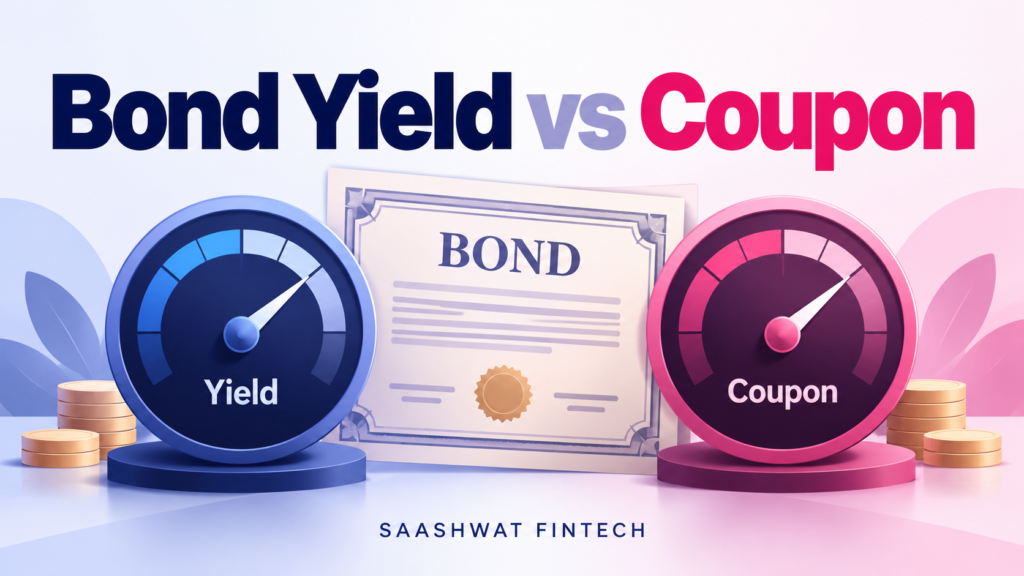
A bond’s coupon is not the same as the return a new buyer will earn. The purchase price, repayment terms, credit risk and time to maturity all matter. Understanding bond coupon versus yield helps avoid comparing products using a single attractive percentage.
Separate three measures
The coupon describes the contractual interest relative to face value. Current yield compares annual coupon income with the price paid. Yield to maturity uses the timing of contractual payments and repayment value to estimate an annualised yield under specified assumptions.
None of these measures removes the possibility of default. A quoted yield is not a guarantee that every payment will arrive on time or that an investor can sell at an expected price.
Work through a simple example
Imagine a bond with a ₹1,000 face value and an annual ₹80 coupon. Its coupon rate is 8%. If someone buys it for ₹950, current yield is approximately 8.42%, calculated as ₹80 divided by ₹950.
If the buyer pays ₹1,050, current yield is approximately 7.62%. Yield to maturity will differ because it also reflects the repayment at face value and the time remaining. This illustration ignores accrued interest, fees, tax and payment-frequency effects.
Read the issuer and structure
Check issuer credit quality, seniority, security, covenants and any call or put provisions. “Secured” does not mean recovery is immediate or certain. A credit rating is an assessment that can change, not insurance against loss.
A callable bond can return principal earlier than expected under its terms. That can change the practical return and leave the investor needing to reinvest at a less attractive rate.
Plan for liquidity and rates
Market prices of fixed-rate bonds generally move inversely to required yields, other things equal. Longer sensitivity to rates can mean larger price moves. Thin trading can also make a displayed quotation difficult to realise for your intended quantity.
Before buying, document the maturity date, interest schedule, total purchase cost and likely exit route. Check current tax treatment separately with a qualified professional.
Is the highest yield automatically the best choice?
No. Higher yield may compensate for greater credit, structural or liquidity risk.
Can I lose money before maturity?
Yes. A sale price can be below the purchase price; credit problems can also affect payments.
Explore Saashwat’s product information and SEBI’s investor resources for further learning.
Official learning references
Educational content only; not personalised investment advice or a recommendation. Investments and trading involve risk. All numerical examples are hypothetical.